Bitget Review: Is Copy Trading a Feature or a Trap for Beginners?
Bitget's spot fees sit at 0.1 percent and its copy trading network is the largest on any exchange we tested. We funded an account, followed three elite traders and checked what actually happens when leverage goes wrong.
6.8out of 106.8
Our verdict
Bitget's copy trading network is genuinely the deepest on any exchange we reviewed, with risk tools a beginner can set before following anyone. Those tools only work if a new trader actually uses them, and the platform's own leverage limits make it easy to hand your stop-loss discipline to someone else's account. The exchange itself runs clean fees and broad asset coverage, but it keeps expanding its restricted-country list, including a full withdrawal from Japan in August 2026, so check your jurisdiction before funding an account.
Best for: Traders who follow a vetted trader with a hard position cap and a stop-loss already set
The question we actually tested
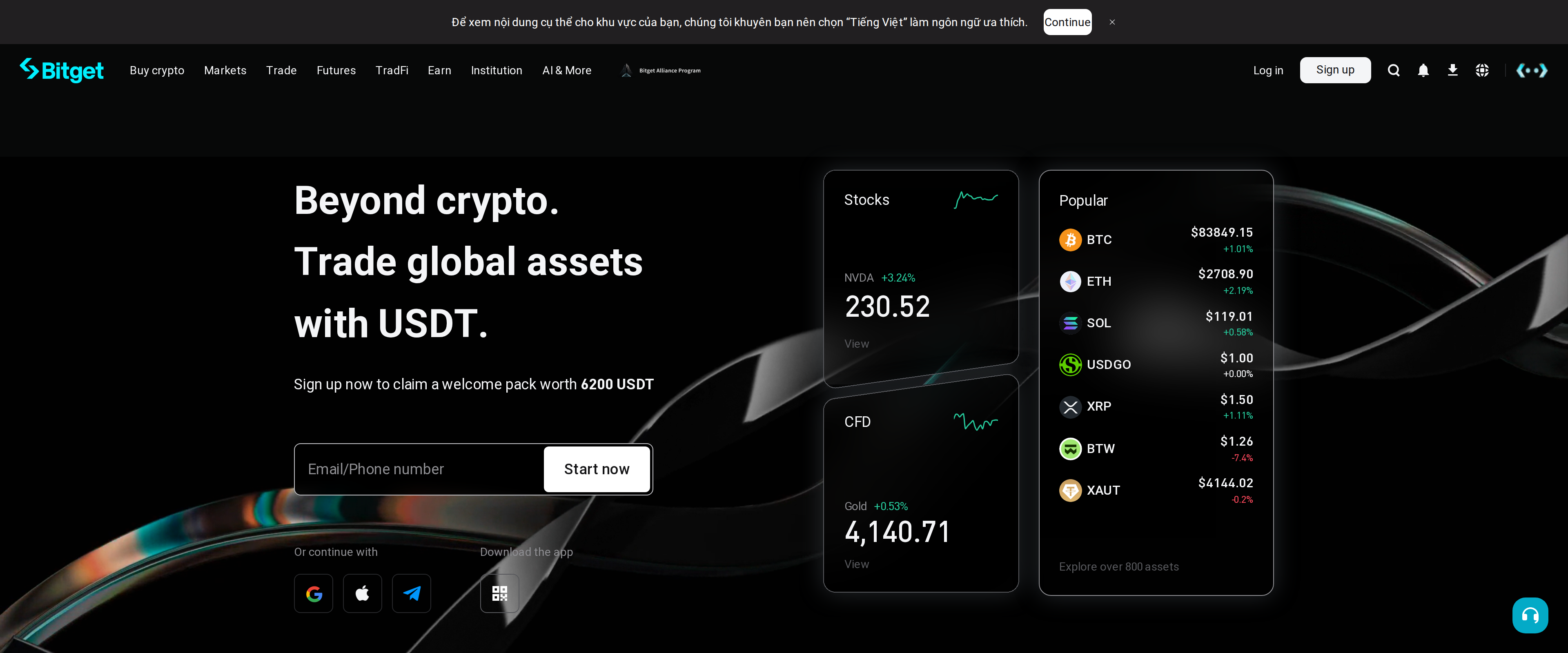
Bitget markets copy trading harder than any other feature on the platform, and the pitch is simple: pick a trader with a public track record, set how much to follow them with, and let their positions mirror into your account. We opened an account, funded it, followed three elite traders at different risk levels, and traded spot ourselves to see whether the fee sheet matched what Bitget advertises. Bitget also now bills itself as a "universal exchange" spanning crypto, tokenized stocks, gold and forex under one account, a broader pitch than most crypto-only rivals make, and we wanted to see whether the copy trading network held up under that wider umbrella or got diluted by it.
Fees are ordinary, and that is a compliment
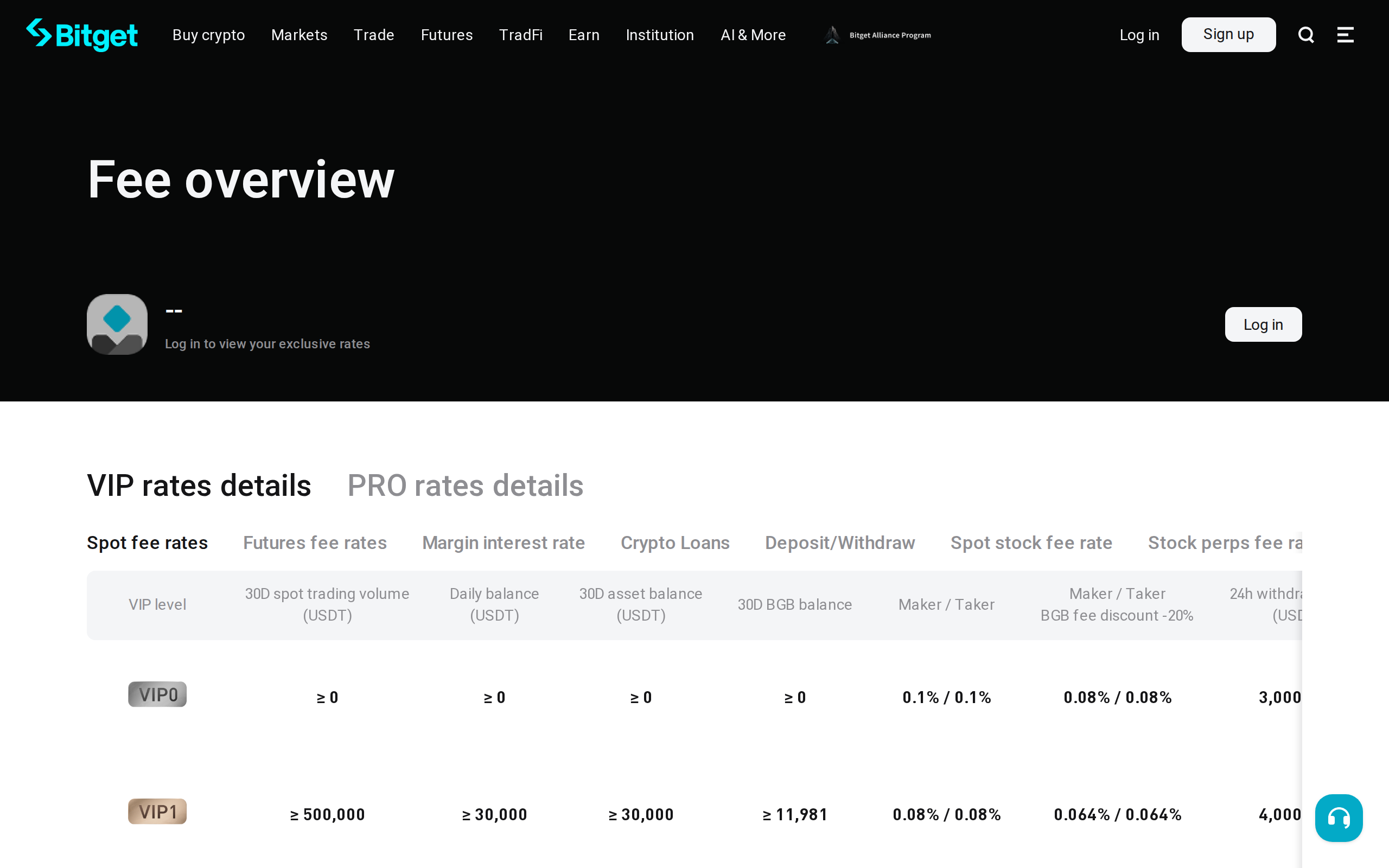
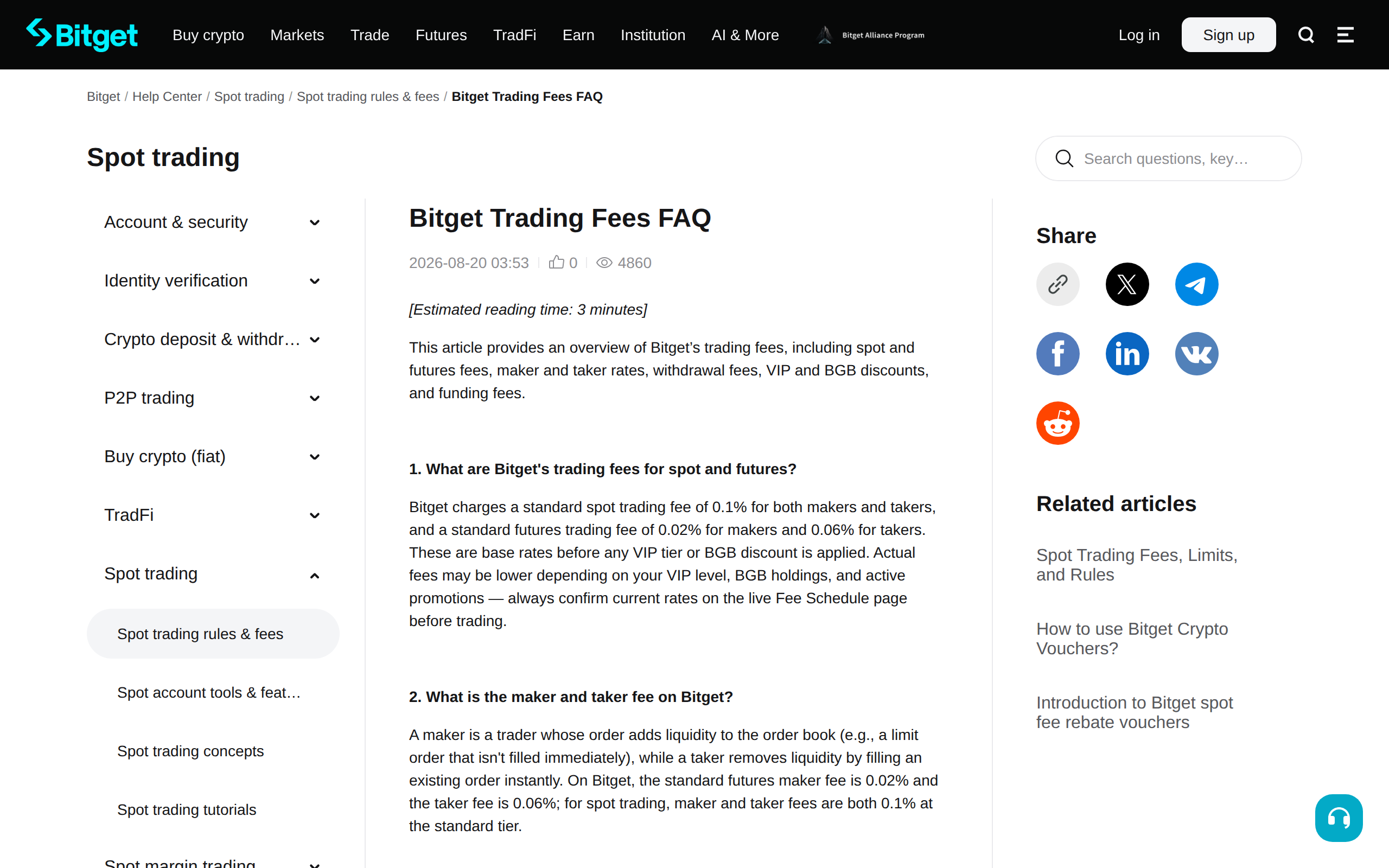
Spot trading costs 0.1% on both sides for a regular account, with no maker-taker split, and that rate drops further if you pay in BGB, the exchange's own token. USDT-M futures run 0.02% maker and 0.06% taker before any discount. Deposits are free, and withdrawal fees are network costs shown on the confirmation screen rather than a hidden Bitget markup. None of this beats the cheapest exchange we have reviewed, but it is competitive, transparent, and it matched the numbers on Bitget's own fee schedule page when we checked a live trade.
Bitget's public fee schedule page
Copy trading: the controls exist, but the leverage is the trap
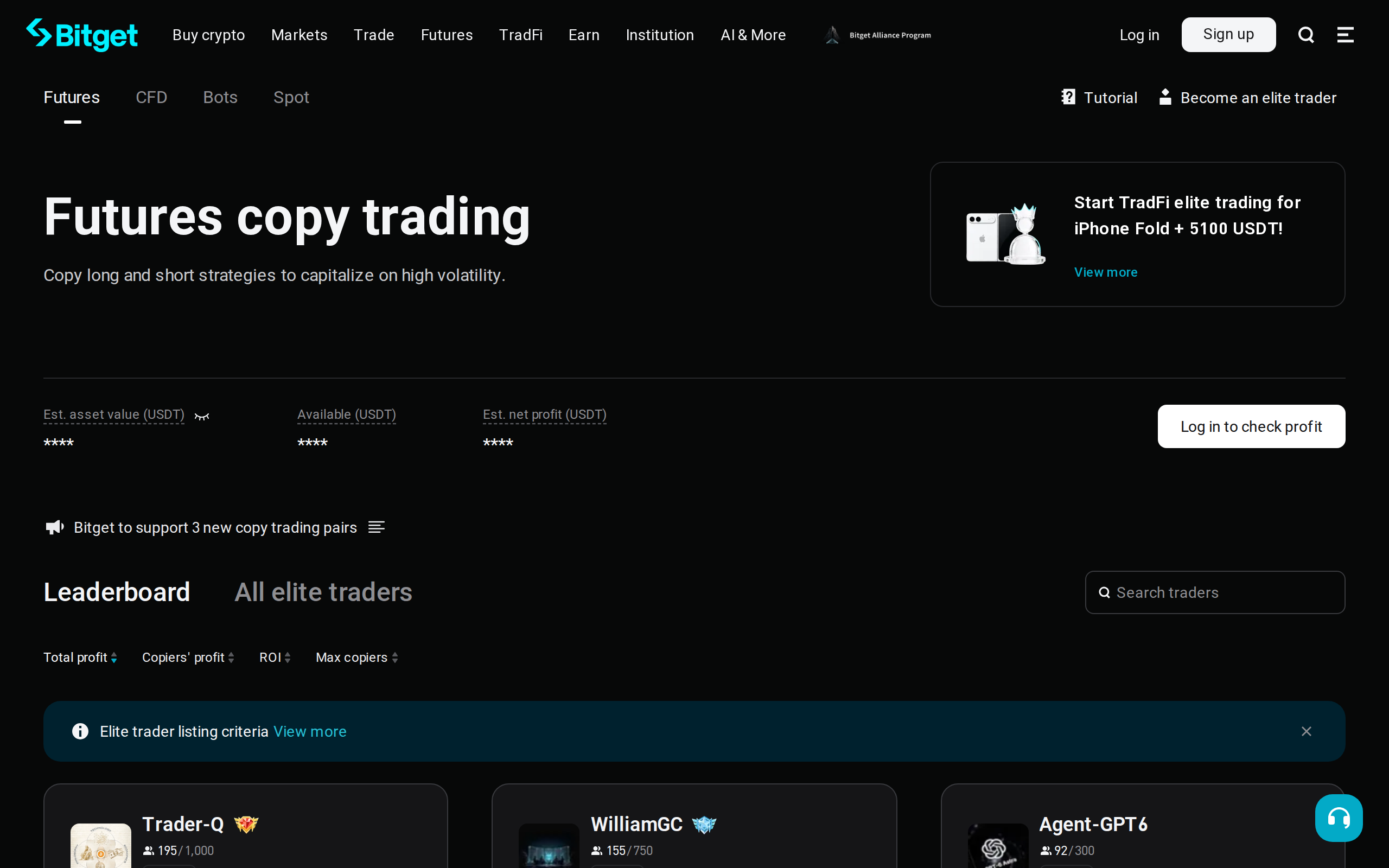
The copy trading interface lets a follower set a maximum investment, a per-trade cap, a stop-loss level and an auto-unfollow rule if a trader's performance drops. We used all four and they worked as described: one of the three traders we followed hit a losing streak, and the auto-unfollow rule pulled us out before the drawdown got worse. That is the feature working as intended. The risk sits underneath it: Bitget's CFD-style copy products support leverage running into the hundreds, and at that level a five percent move against the position can wipe out the entire stake or trigger liquidation outright. A beginner who copies a trader without setting those four controls first is handing over full discretion, including the discretion to use leverage they would never choose themselves.
Bitget's futures copy trading landing page
Reading the trader you are about to follow
Before following anyone, we pulled up each candidate's win rate, average leverage and drawdown history, which Bitget displays on every trader's public profile. Two of the three traders we chose kept leverage under 10x with a visible stop-loss discipline in their trade history. The third ran higher leverage with a thinner track record, and that was the account where the auto-unfollow rule earned its place. The lesson from a month of this is not that copy trading fails, it is that it only works as a beginner tool when the beginner reads the trader's history before committing, which most will not do without being told to.
Bitget's support center fee FAQ, cross-checked against the live fee page
The part that matters more than any fee: where Bitget can operate
Bitget's regulatory footprint is thinner than its trading volume suggests. It holds a Bitcoin service provider license from El Salvador, an AUSTRAC registration in Australia, and national VASP registrations across parts of the EU, but no full MiCA CASP license and no US entity. In 2026 the exchange expanded its restricted list from 25 to 28 jurisdictions, withdrew from France in March over compliance requirements, and pulled out of Japan entirely in August after repeated warnings from the Financial Services Agency. None of that means the exchange is unsafe to use where it operates legally. It means a trader in a market Bitget has already exited, or is likely to exit, should not build a position they plan to hold for months.
Verdict
Bitget earns real marks for fee transparency and for building copy trading controls that actually protect a follower who uses them. It loses marks for a regulatory footprint that keeps shrinking in exactly the markets a retail trader would expect coverage, and for a leverage ceiling on copy products that turns a beginner-friendly feature into a fast way to lose a stake. Someone opening an account today should read the trader's history before following, set the four risk controls before funding a copy position, and confirm Bitget still serves their country before they treat it as a long-term home for funds. We rate it 6.8: solid execution on the core exchange, real caution warranted on copy trading and jurisdiction.
What we liked
Flat 0.1% spot maker and taker fee, cut further with BGB holdings
Deep copy trading network with visible trader track records
Per-trade limits, stop-loss and auto-unfollow controls for followers
No deposit fees, and network withdrawal costs shown before confirmation
What held it back
Copy trading leverage can reach levels where a 5% move triggers liquidation
Restricted country list grew from 25 to 28 jurisdictions in 2026
Withdrew fully from Japan in August 2026 after regulator warnings
No MiCA CASP license yet, only national VASP registrations in the EU
Specs
Spot maker/taker
0.1% / 0.1%, down to ~0.08% with BGB discount
USDT-M futures maker/taker
0.02% / 0.06%
Deposit fees
None
Copy trading leverage
Up to several hundred times on CFD-style products
Licensing
El Salvador DASP/BSP, AUSTRAC registration, EU national VASP
Restricted jurisdictions
28 as of 2026, including US, Canada, Japan, South Korea
Products
Spot, futures, copy trading, stocks and forex CFDs