Gemini review: does the compliance record justify the fees?
We traded on Gemini's standard mode and its ActiveTrader order book, then lined up its BitLicense and trust-charter credentials against fees that run well above Kraken and Coinbase Advanced for a small account.
7.2out of 107.2
Our verdict
Gemini earns its compliance-first reputation on paper: a New York trust charter under BitLicense, SOC 2 Type 2 certification and no history of a major security breach are real credentials, not just marketing copy. None of that changes the math on a small trade. Standard-mode orders under $200 can cost 1.49 percent, and ActiveTrader's entry tier of 0.35 percent maker sits above Kraken's comparable tier and well above Coinbase Advanced for most retail volumes. A trader who values the licensing and custody story should pay the premium knowingly; a trader shopping on price alone will find cheaper execution elsewhere.
Best for: New York-based or compliance-focused investors who will route size through ActiveTrader, not the standard app
Gemini has spent a decade building a reputation as the compliance-first exchange, the one founded by people who wanted regulators in the room from day one. That reputation is not free. We opened an account, traded through both the standard app and the ActiveTrader order book, and lined up what each actually costs against what Kraken and Coinbase Advanced charge for the same trade.
What a decade of licensing actually bought
Gemini Trust Company operates under a New York State Department of Financial Services BitLicense and a trust charter, which makes it a qualified custodian under New York banking law rather than a company merely claiming to be careful with customer assets. It also holds a UK Financial Conduct Authority registration and a Major Payment Institution license from Singapore's Monetary Authority, and the company carries SOC 2 Type 2 certification with no history of a major platform-level breach.
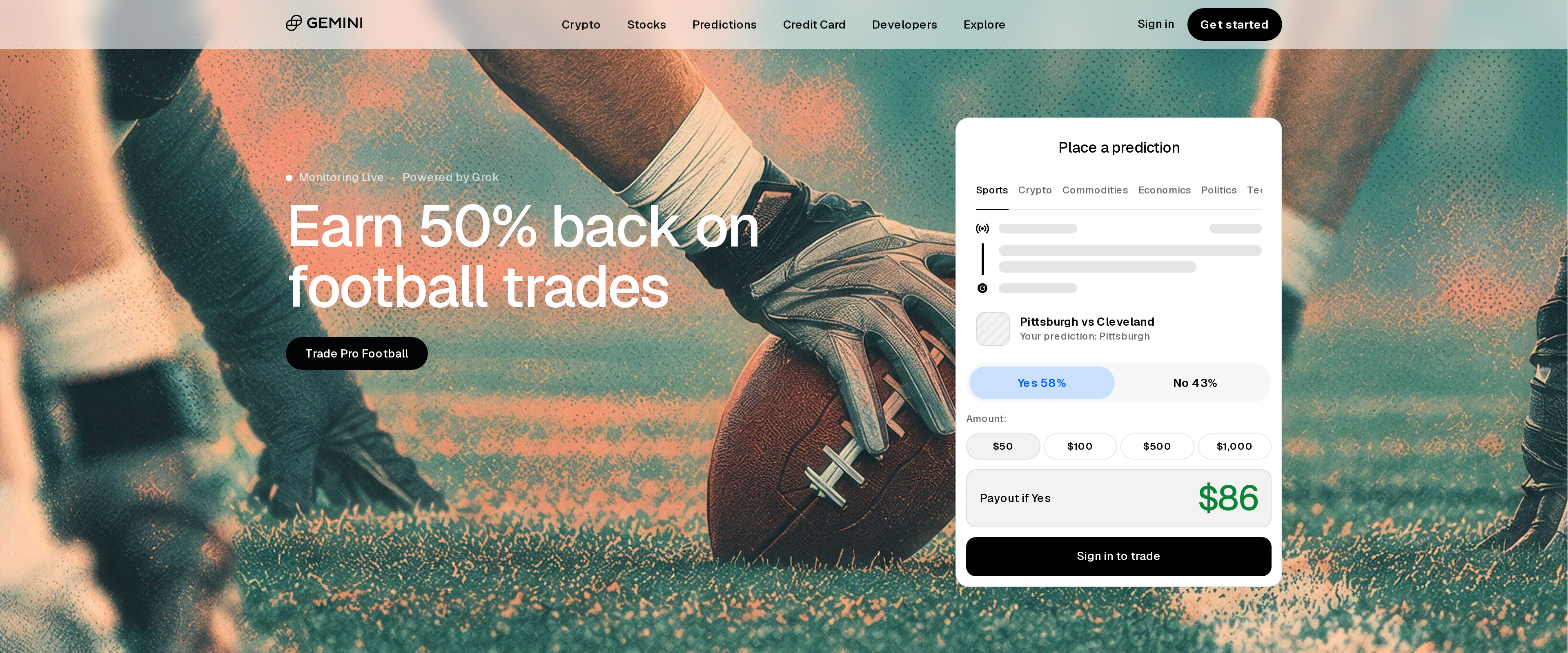
That is a genuinely strong file for an exchange in an industry where several rivals cannot say the same, and Gemini's homepage now leans on it while also pushing newer products like sports prediction markets and stock trading alongside the original spot exchange. The question is whether the licensing is worth what Gemini charges for access to it, and the fee pages are where that question gets answered.
Two fee schedules, two very different prices
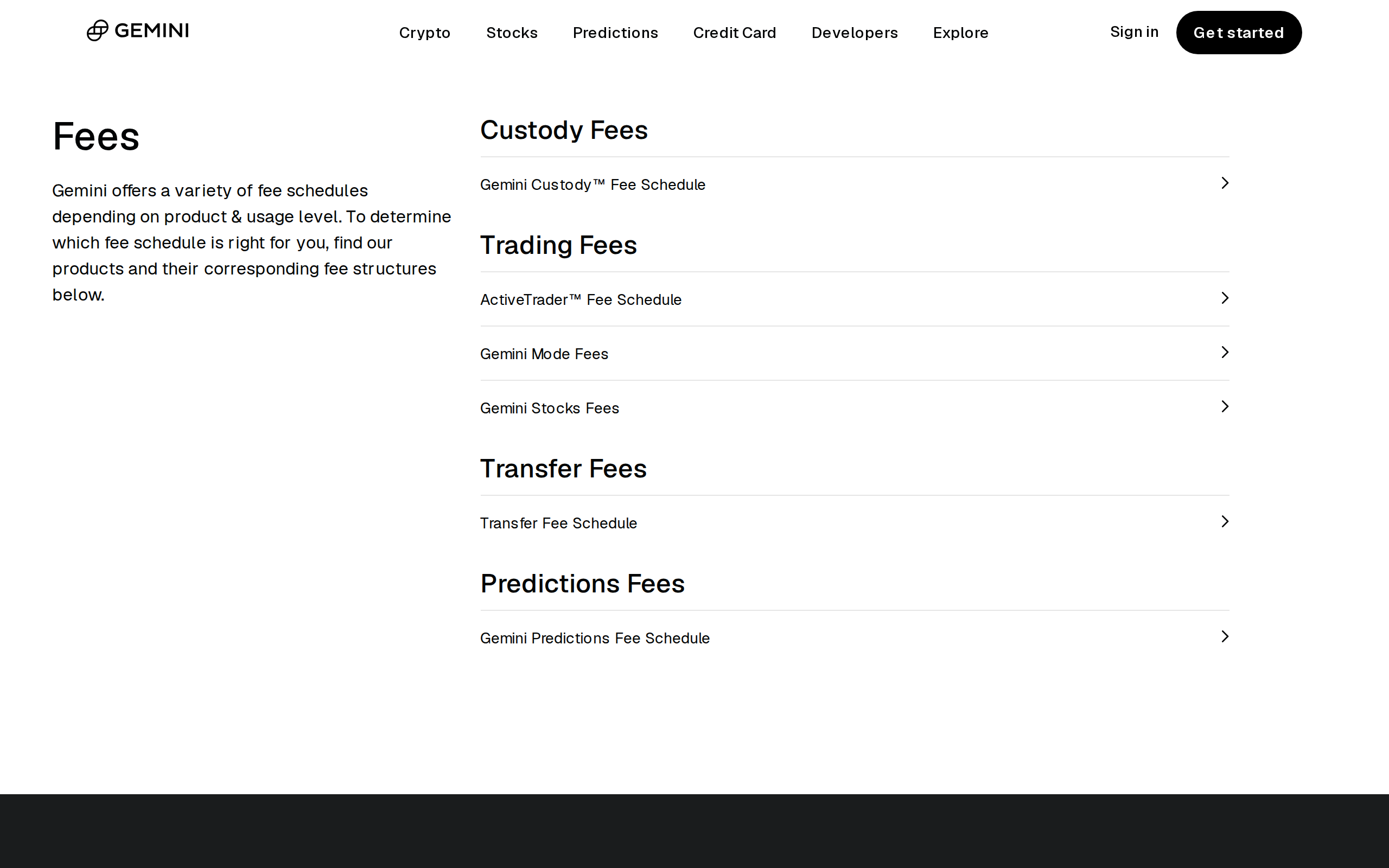
Gemini splits pricing across several fee pages by product, and the split matters because the two most common paths for a retail user land at very different costs.
Gemini routes traders to one of several fee schedules depending on which product and interface they use
Trade through the simple Gemini Mode app or website, and an order can cost as much as 1.49 percent on transactions under $200, with a spread built into the quoted price on top of that on Instant and Recurring orders. Move the same trade to ActiveTrader, Gemini's order-book interface, and the entry tier drops to 0.35 percent maker and 0.40 percent taker, falling all the way to 0.00 percent maker and 0.10 percent taker for accounts trading more than $500 million a month.
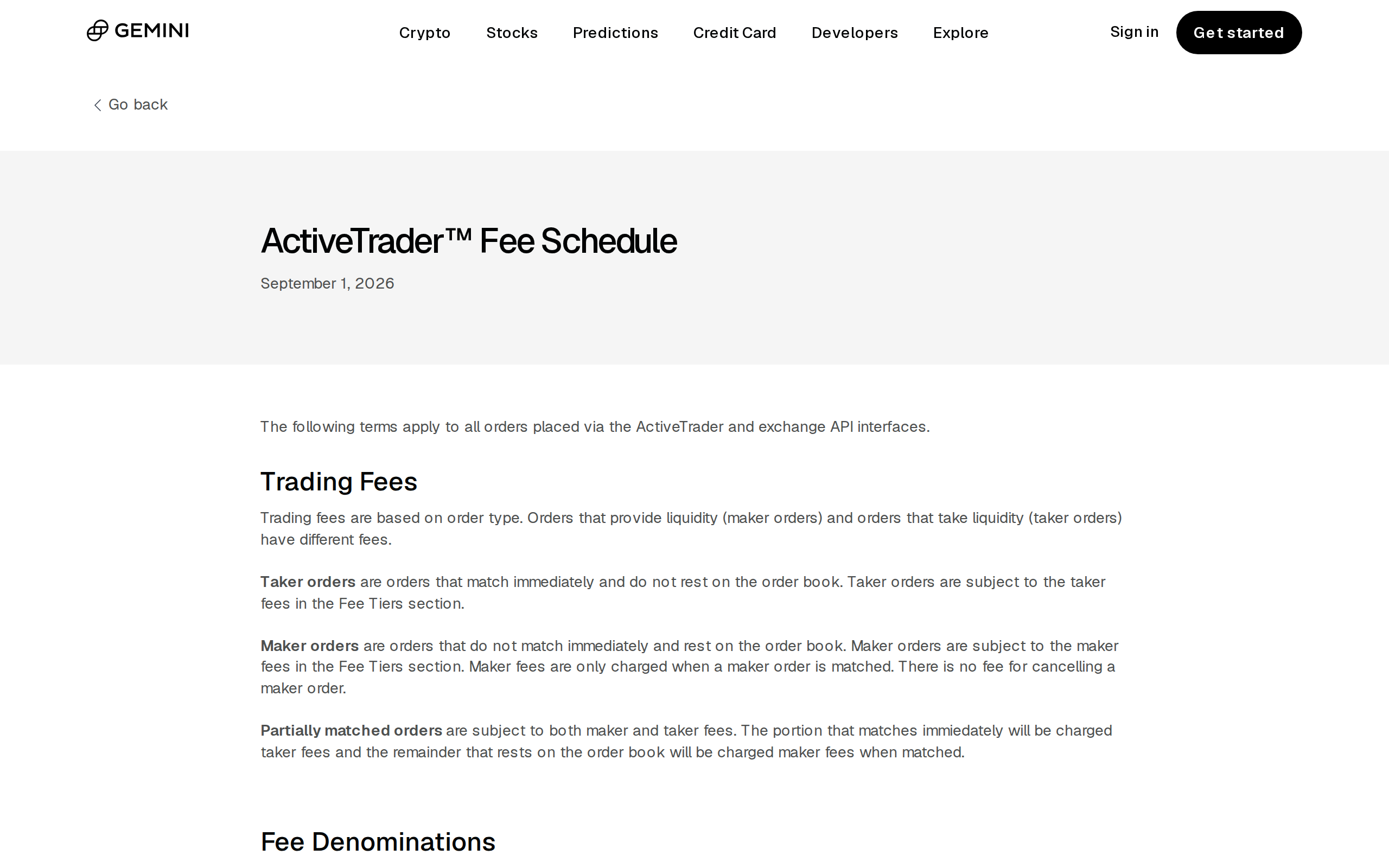
ActiveTrader's fee schedule: the maker/taker tier structure that only applies once you leave the simple app
That gap is the single most important fact for a new user to know before funding an account: opening the app and tapping buy is the most expensive way to use Gemini by a wide margin, and the exchange does not make the cheaper alternative obvious to someone who has not gone looking for it.
Set against Kraken and Coinbase Advanced
Kraken's Pro fee schedule and Coinbase's Advanced Trade tier both undercut Gemini's ActiveTrader entry rate for a trader who has not built up meaningful monthly volume; Coinbase Advanced in particular tends to price most retail-sized accounts below Gemini's comparable tier.
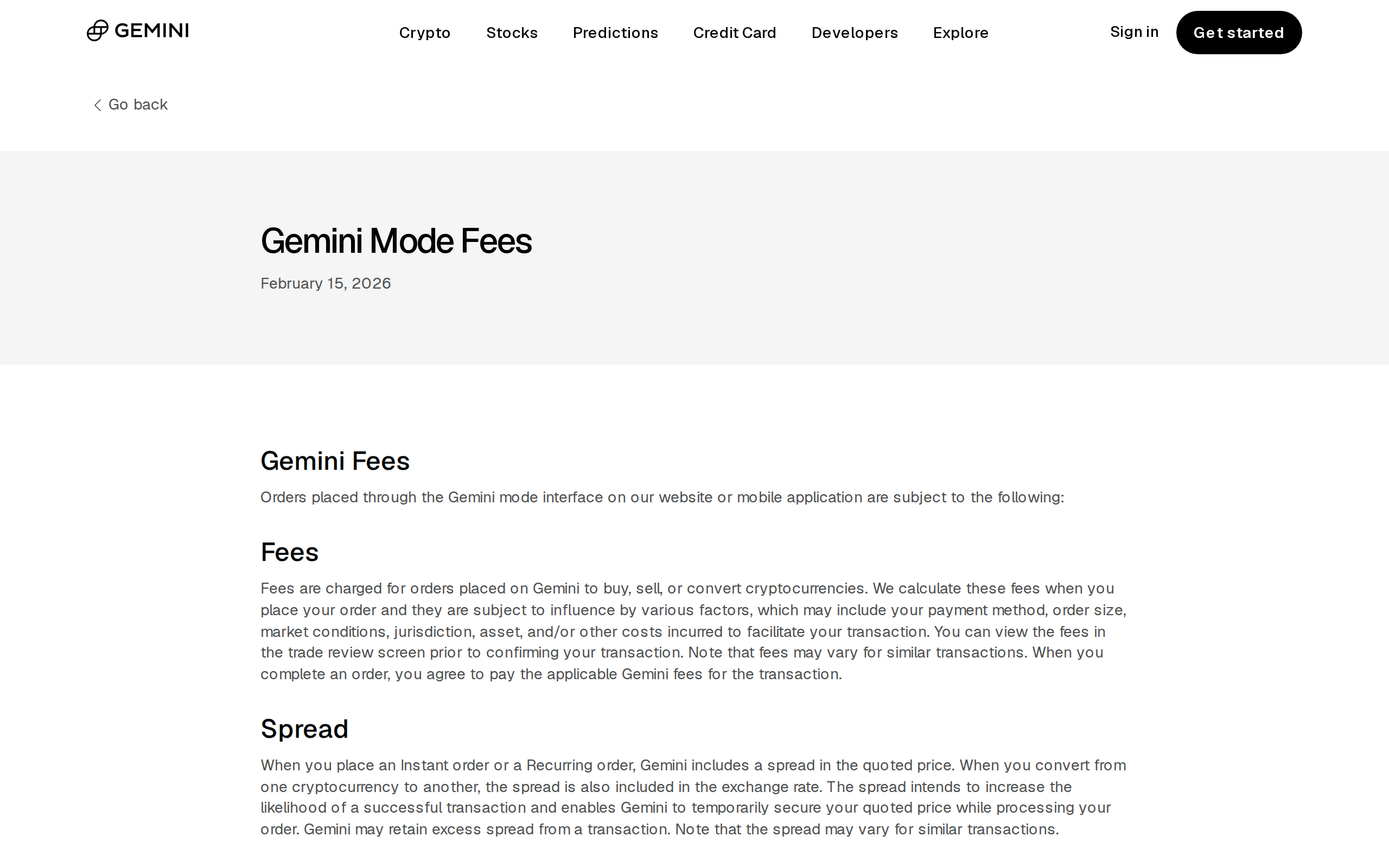
The fine print behind Gemini Mode's pricing: fees and spread are both baked into the quoted price before you confirm a trade
Gemini's answer to that gap has never really been price; it has been the licensing and custody story described above, plus a broader product shelf that now includes stock trading, prediction markets and a branded credit card. That is a legitimate pitch for a specific kind of investor, but it does not make Gemini competitive on cost for someone whose only criterion is the lowest fee on a modest trade.
Withdrawing and getting a question answered
We pulled both a crypto withdrawal and a fiat transfer out of Gemini to see whether the compliance-heavy setup slowed anything down in practice. The crypto withdrawal cleared once network confirmations landed, with no extra hold beyond what the blockchain itself required. Moving USD out by ACH took a couple of business days, the ordinary pace for that rail rather than anything specific to Gemini, and a wire moved faster at the cost of a flat fee for the privilege.
Support answered a account-verification question inside a few hours during business hours on a weekday, noticeably quicker than the multi-day waits we have logged at some competitors, though a message sent late on a Friday sat until Monday. That is a reasonable trade for the level of documentation required to get an account fully verified in the first place: the identity checks that back the BitLicense custody claim are also the reason opening and verifying an account here takes longer than a lighter-touch competitor.
Who gets value here
An investor who wants a regulated custodian with a paper trail going back to a state trust charter, who will actually route meaningful volume through ActiveTrader rather than the simple app, and who values the SOC 2 certification and clean security record gets real value from Gemini that is hard to replicate at a smaller or less regulated venue.
A trader opening a small account through the standard app, comparing headline numbers without checking which interface they are using, will pay more here than at Kraken or Coinbase for the same trade and should know that going in. We would keep an account here for the custody story and specifically make a point of using ActiveTrader rather than the default app for anything beyond a token first purchase.
What we liked
Operates under a New York State Department of Financial Services BitLicense and trust charter
SOC 2 Type 2 certified, with no history of a major platform-level security breach
Registered with the UK FCA and holds a Singapore Major Payment Institution license
ActiveTrader fees fall to 0.00% maker and 0.10% taker above $500 million monthly volume
What held it back
Standard Gemini Mode orders under $200 can cost as much as 1.49% per trade
ActiveTrader's entry tier starts at 0.35% maker and 0.40% taker, above Kraken's comparable tier
A retail trader using the simple app pays a built-in spread on top of the stated fee
Coinbase Advanced undercuts Gemini's ActiveTrader tiers for most non-institutional volumes
Specs
ActiveTrader entry tier
0.35% maker / 0.40% taker fee
ActiveTrader top tier
0.00% maker / 0.10% taker at $500M+ monthly volume
Standard mode fee (under $200)
Up to 1.49% per order, plus spread
US licensing
NY DFS BitLicense and trust charter (Gemini Trust Company, LLC)
International licensing
UK FCA registration; Singapore MAS Major Payment Institution license
Security certification
SOC 2 Type 2
Custody model
Qualified custodian under New York banking law
Additional products
Stock trading, prediction markets, a credit card, developer APIs