Jupiter review: does routing beat a single Solana DEX?
We sent the same SOL to USDC swap through Jupiter's aggregator and directly through a single Solana DEX to see whether the extra routing step actually earns a better fill, then looked at what else the superapp now carries.
Our verdict
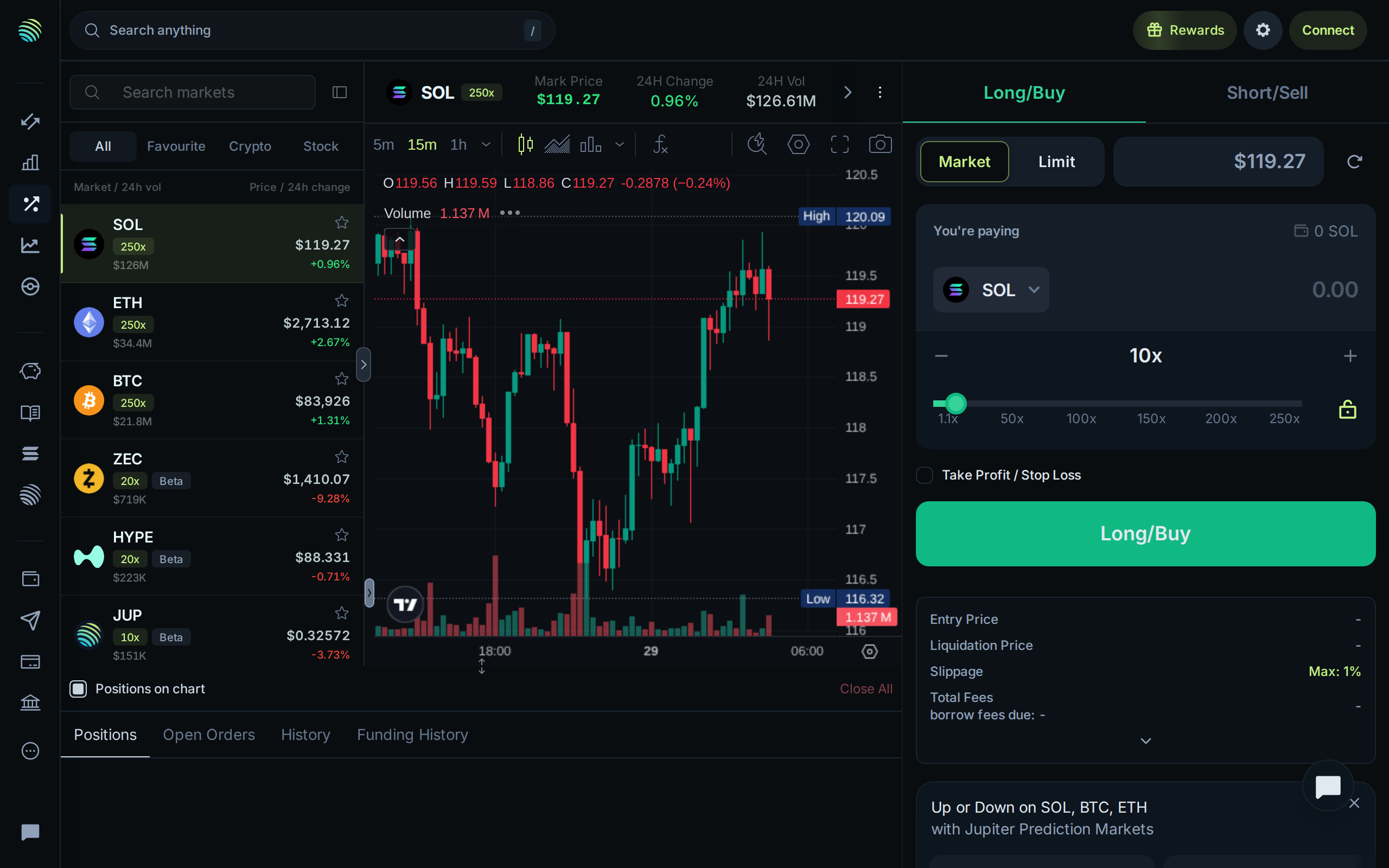
Jupiter delivers on the one job it was built for: routing a swap across more than fifty Solana venues beats going direct to a single DEX on most pairs we tried, and it charges nothing extra to do it. The rest of what Jupiter has become since is a mixed picture. Perpetuals up to 100x leverage sit one tab away from a stablecoin swap, and JUP holders have lived through an 89 percent price collapse and a frozen governance process. Trust the swap; treat the token and the leverage products as a separate decision.
Best for: Solana traders who want the best routed swap price without paying an aggregator markup
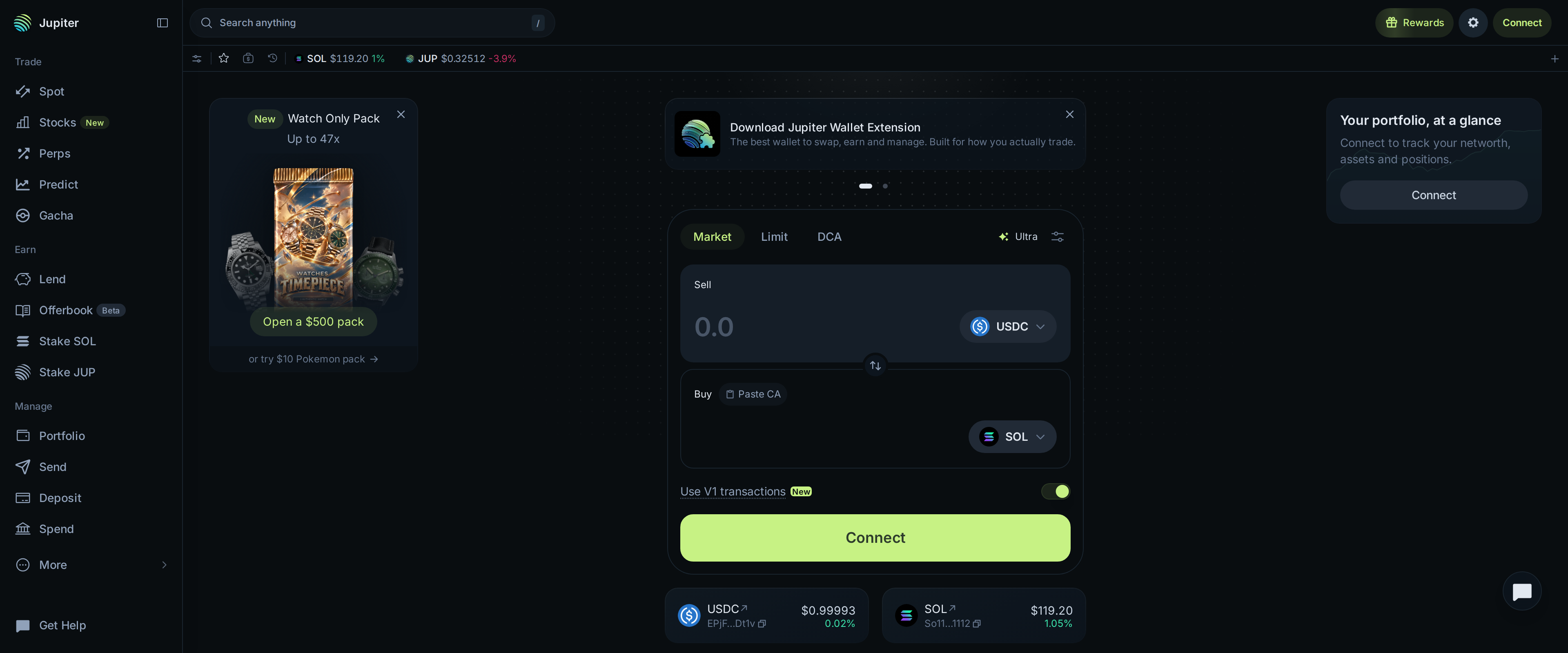
Jupiter does not run an order book of its own. It reads every price quoted across Solana's other exchanges and picks the route that gets a swap filled for the least slippage, charging nothing for the privilege. We wanted to know if that promise holds up against just clicking swap on a single DEX, so we ran the same trade size both ways and watched what came back.
Sending the same trade two ways
A 500 USDC to SOL swap quoted directly through a single Solana AMM came back with more price impact than the same order routed through Jupiter, which split the fill across two pools to avoid moving one market on its own. The difference was small in absolute terms on a trade this size, a few cents rather than dollars, but it scales: a trader moving five figures through one pool alone eats visibly more slippage than the same size split by a router that can see the whole market at once.
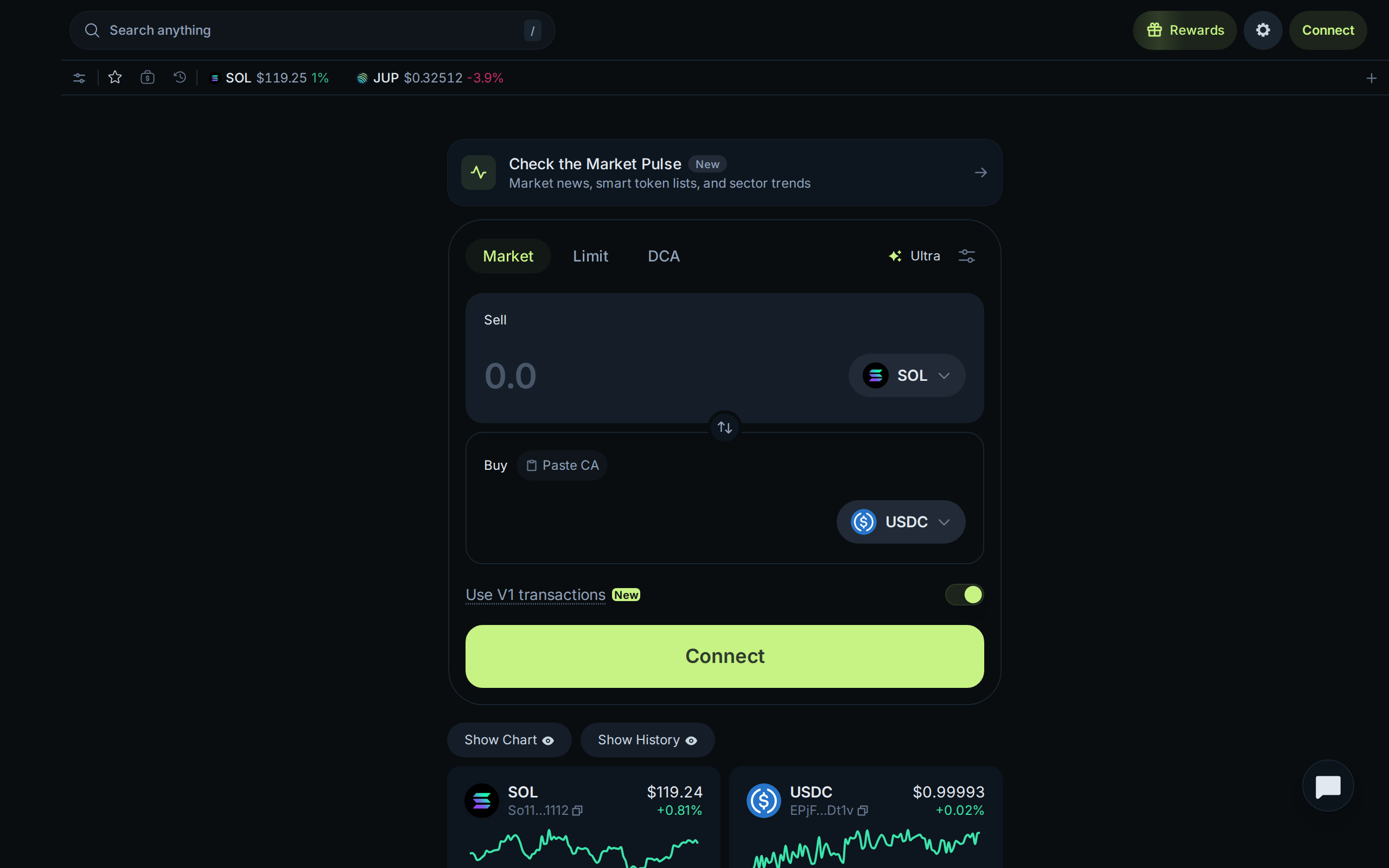
That routing engine now reaches more than fifty Solana venues, among them Raydium, Orca, Meteora and Phoenix, and Jupiter says it carries close to 95 percent of Solana's aggregator volume as a result. Charging 0 percent on top of that is the part worth repeating: what a trader pays is the underlying pool's fee, typically 0.05 to 0.3 percent, plus a Solana network fee that rarely clears a cent. Compare that to swapping on Ethereum, where the network fee alone can dwarf the entire trade on a small order, and the appeal of doing this on Solana specifically becomes obvious.