Raydium review: can you trade new Solana tokens without getting rugged?
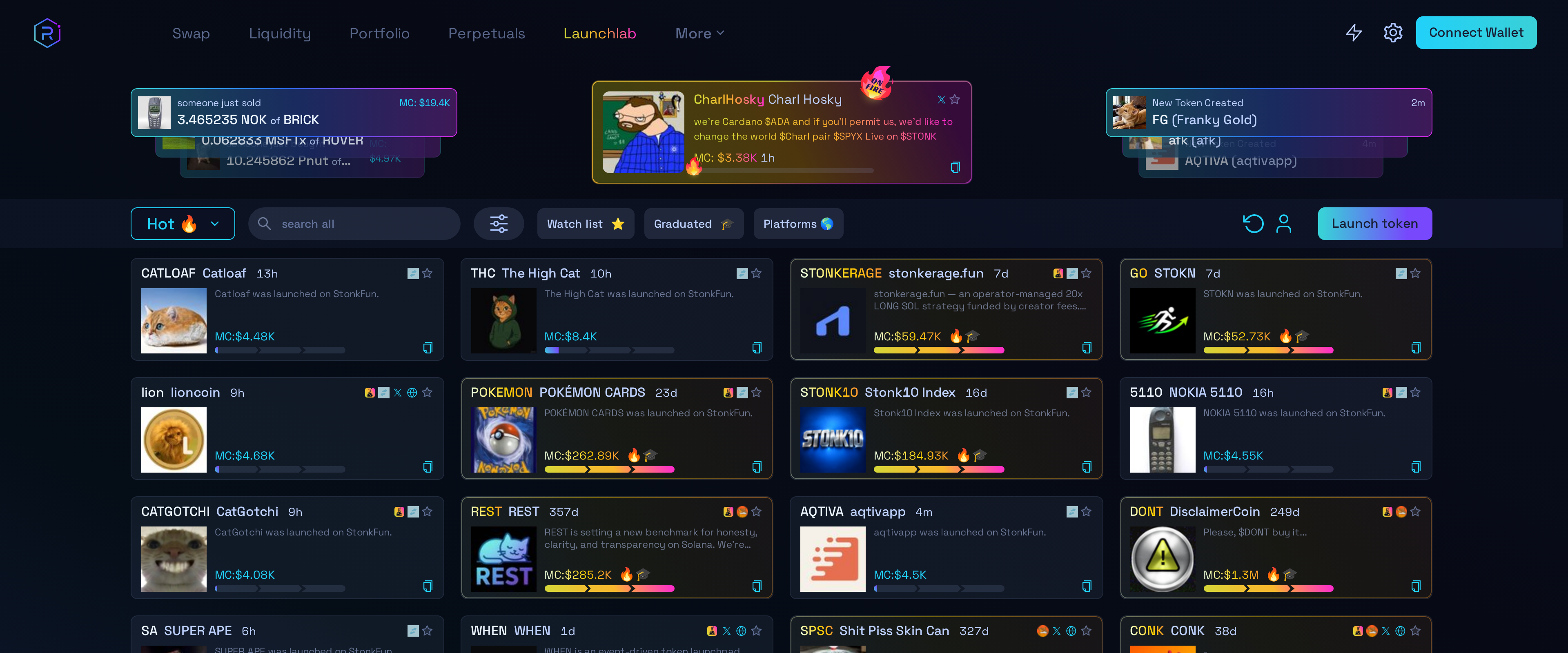
Raydium is where a huge share of new Solana tokens list first, through a bonding-curve launchpad called LaunchLab. We checked swap fees, watched fresh LaunchLab listings, and weighed independent rug-pull research against the platform's audit history.
Our verdict
Raydium's core swap engine is solid: contracts have run since 2021, fees as low as 0.01 percent undercut most rivals, and the AMM v4 pools untouched by 2026's exploit still handle billions without issue. The part that demands caution is LaunchLab, the launchpad where most of Raydium's newest tokens first trade. Researchers flagged rug-pull patterns across a striking share of pools launched through platforms like this one, and Raydium's contracts do nothing to stop a creator walking away with liquidity. Trade established pairs here without hesitation. Trade a token launched an hour ago only after checking its mint and freeze authority yourself.
Best for: Solana traders who already run a rug-pull checker like RugCheck before buying any token launched in the last 24 hours
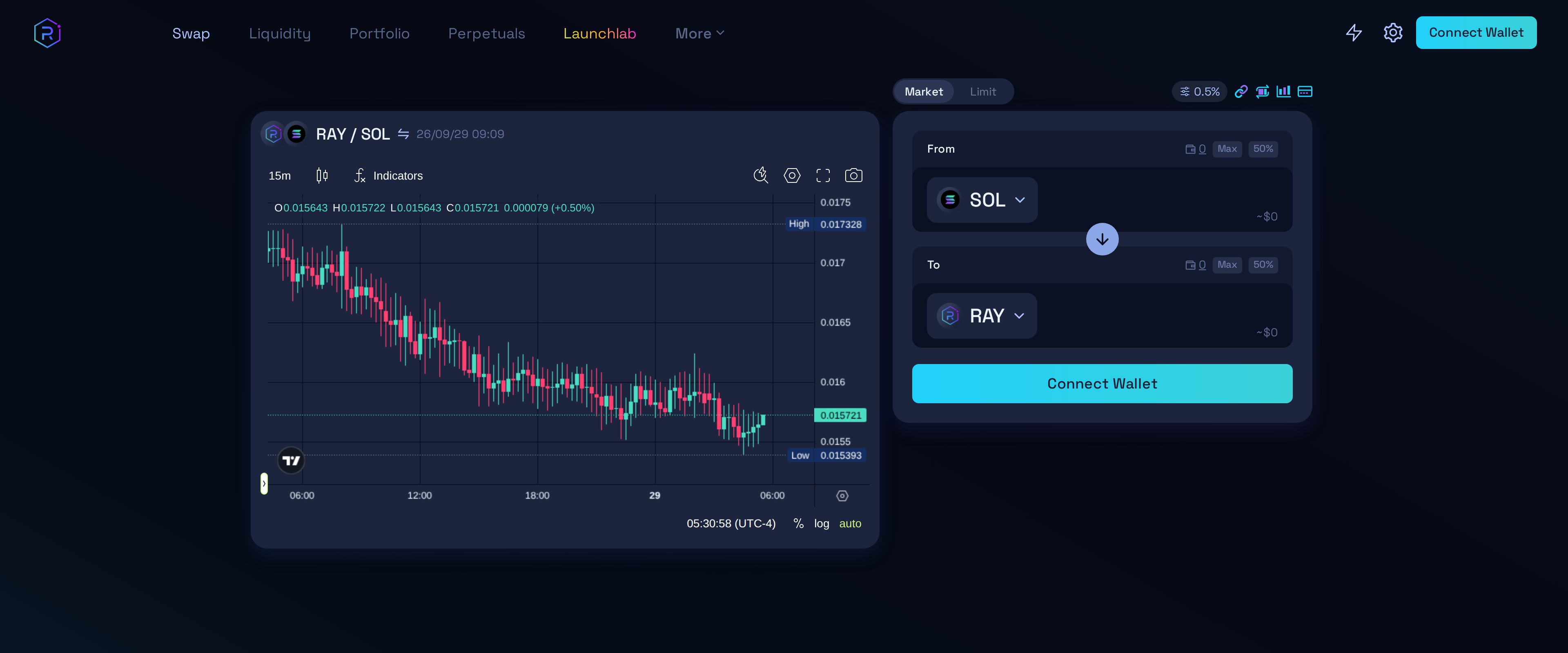
Solana's meme-coin cycle runs through a handful of venues, and Raydium is one of the biggest. Its swap interface handles ordinary trading the way any AMM does, competently and without drama. The interesting question is what happens on the other side of the platform, where brand-new tokens launch and someone has to decide whether to buy in the first few minutes.
Swapping, at the fee level that matters
Raydium runs two pool types. CPMM pools, the classic constant-product design, charge 0.01, 0.25 or 1 percent depending on the pool, with 0.25 percent the tier most pairs actually use. CLMM pools let liquidity providers concentrate capital in a chosen price range for better fee capture, represented as NFT positions rather than fungible LP tokens, at fees from 0.01 up to 1 percent. On top of whichever fee applies, every swap also pays Solana's own network cost, roughly 0.0015 SOL for a CPMM trade, plus any priority fee needed to land quickly during busy periods.
Where the liquidity actually sits
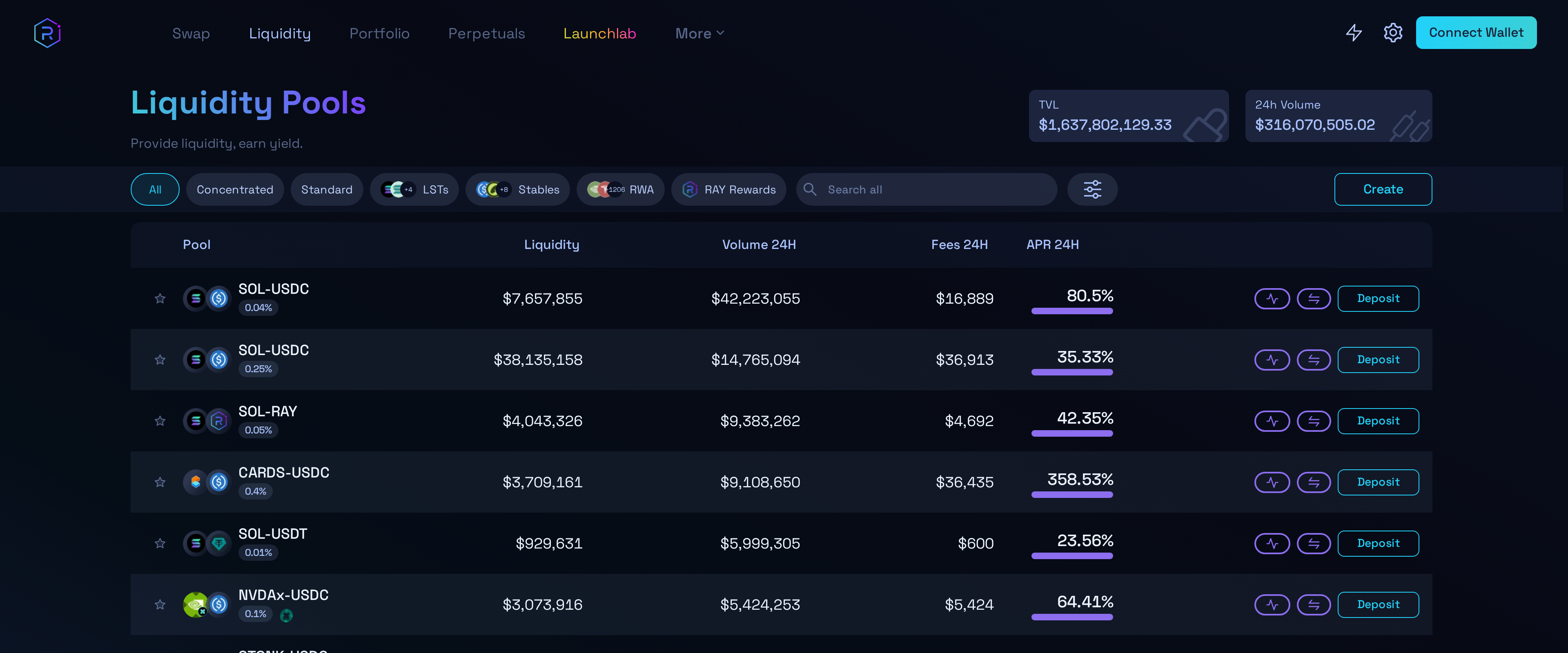
Pool depth on major pairs is real, and it shows in execution: swaps on SOL, USDC and other established tokens filled at quoted prices without the slippage smaller DEXs show on size. That depth is also why Raydium remains a default choice for anyone doing serious Solana volume rather than a single meme-coin flyer.